In a span of two years, the pavement Super Late Model community has gone from zero national sanctioning bodies to two of them.
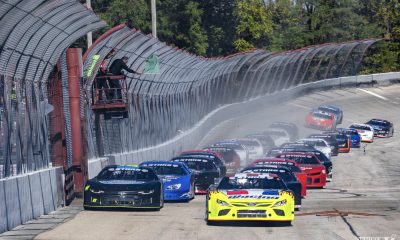
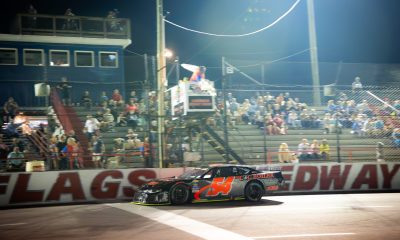
March 11 will be an important day in the history of the industry, or at least that is the expectation of Track Enterprises president Bob Sargent, who will usher in the return of the ASA National Tour brand with the inaugural ASA STARS event at Five Flags Speedway.
The race is the culmination of a years long project to unify the three most prominent regional tours east of the Mississippi under one promotional umbrella with the goal of creating a national Super Late Model championship in the spirit of World of Outlaws or USAC.
More accurately, it’s a modern-day equivalent of the original ASA National Tour, All Pro Super Series or Hooters Pro Cup.
Sargent aims for ASA STARS to invite the biggest names in pavement short track racing, along with occasional NASCAR cameos, to eventually crown a unified national champion. The inaugural 10-race schedule takes three prominent races from the Southern Super Series, Champion Racing Association and Midwest Tour respectively alongside the Slinger Nationals.
The schedule will feature increased purses, a loyalty program for full-time teams and a stronger marketing platform never before seen in pavement racing — a track record successfully established by Sargent and Track Enterprises in three decades largely promoting open wheel dirt racing.
The entry list, with almost two weeks left to grow, features everyone you want to see for a race at one of the crown jewel facilities in Five Flags Speedway. Bubba Pollard, Derek Thorn, Stephen Nasse, Matthew Craig, Ty Majeski, Grant Enfinger, Preston Peltier, Casey Roderick and the Donnie Wilson Motorsports cars are all pre-entered into the Sunshine State 200.
Getting to this point, as rewarding as it may be, has been an incredibly challenging process for Sargent.
“I knew it would be a challenge, but this is way more than I had anticipated,” Sargent told Short Track Scene by phone on Tuesday afternoon. “Anytime you start from scratch, it’s going to be more difficult.
“And we didn’t think we were starting out from scratch with the three tours, but we really have had to go about it as if we were. We are re-designing and tweaking everything you could imagine. We are designing a new tire compound. Licensing. We’ve hired 15 people.”
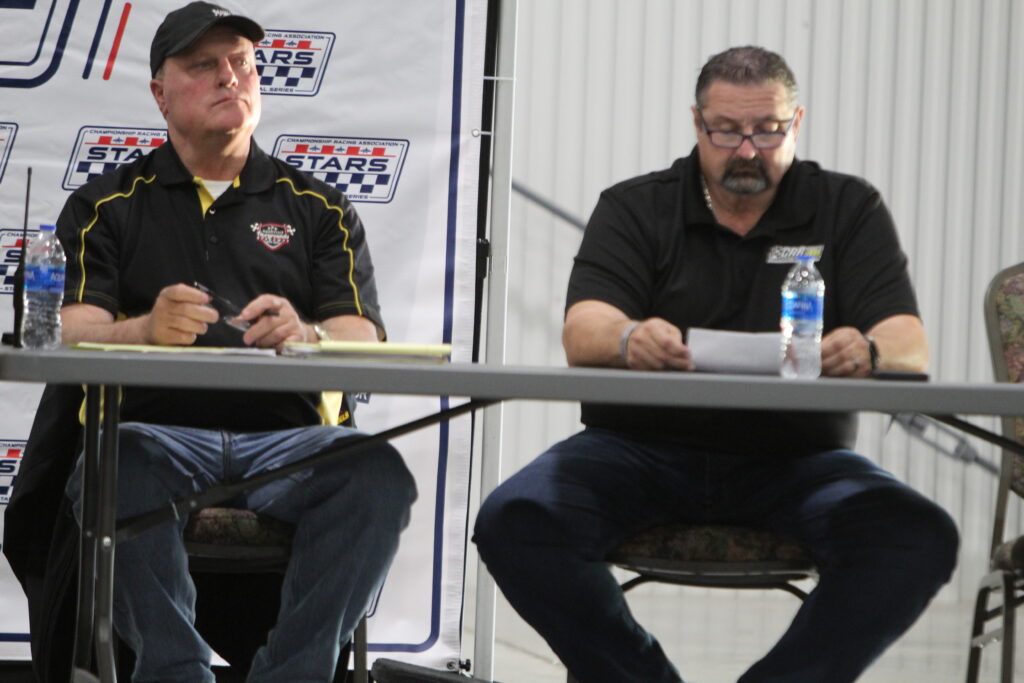
His staff includes director of race operations Joe Balash, Scott Menlen, Greg Wood, Eddie Chew and Nicholas Rogers just to name a few.
“The people I have are the best, by far,” Sargent said, “and I get 15 different opinions from them. I thought, given how much experience we have in the room, that there would be a degree of consensus and that hasn’t been the case
“We’ve had a lot of spirited debate, discussion, and that’s actually been helpful.”
Sargent is the ultimate collaborator, especially in this setting as a promoter that largely comes from the dirt world and has readily admitted that he is outside of his comfort zone. As a result, he frequently makes phone calls to drivers, owners, broadcasters, fellow promoters and media types to get a wide breadth of information to shape his decisions.
“But at the end of the day, someone has to make those decisions,” Sargent said.
Racers have trepidatious optimism about the national tour. Sargent has held multiple open meetings with teams, most notably prior to the All American 400 and at the Performance Racing Industry trade show, making himself very available to any concerns or questions they might have.
The concerns are best articulated by Pollard.
“I think you have to generate exposure,” Pollard told Short Track Scene during the World Series of Asphalt. “You have to pay the drivers; you have to get to that level of support that Lucas Oil and the World of Outlaws have.
“It’s going to take some time, and hopefully teams will want to support it, but here’s the deal — I don’t want to see just another series. I want to see something special. I want to see something people talk about.
“Like the ASA, you can’t just use the name if you’re not going to step up to the plate and be on the caliber of that name. They have to be better than what ASA was. I think with the technology and people, it can be, and I understand that it’s going to take time.
“But I don’t want anyone to be comfortable with it being just another series. Short track asphalt racing has needed this for a while, and I want to support it. They are just going to have to work hard to make this happen, and teams too, so it’s going to be a group effort.”
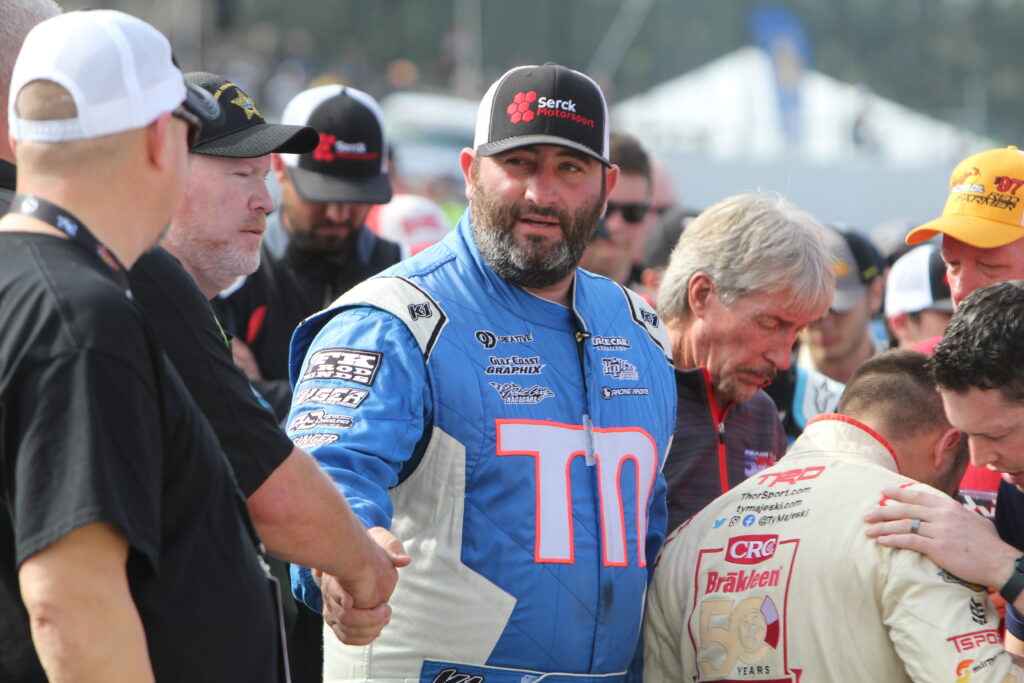
That was a feeling shared by Craig.
“I’ve wanted a national tour for so long,” Craig said. “I’m glad it’s happening but we’ve got to get my dad on board. They need to show us the benefits and pay for a team like us to get to Wisconsin three different times.”
Majeski shared that sentiment too, suggesting that it’s going to be really hard to get the Midwestern drivers who he grew up racing with to both make multiple trips down south and also utilize a different rules package than the one used in the Midwest Tour and at Slinger Speedway.
To that end two-barrel carburetors, a Midwestern staple, is expected to be permitted in the Wisconsin races. The exact rules package should be released this week.
A loyalty program, frequently called a winner’s circle program, is expected to be finalized in the coming days. There is also a $100,000 championship fund with $25,000 additional dollars going to the inaugural champion.
Not to be lost in the debut of the ASA STARS series is that Ricky Brooks will promote his SRL National Tour for the second consecutive season in a joint collaboration with SRL Southwest Tour promoters Larry Collins and Brian Olson.
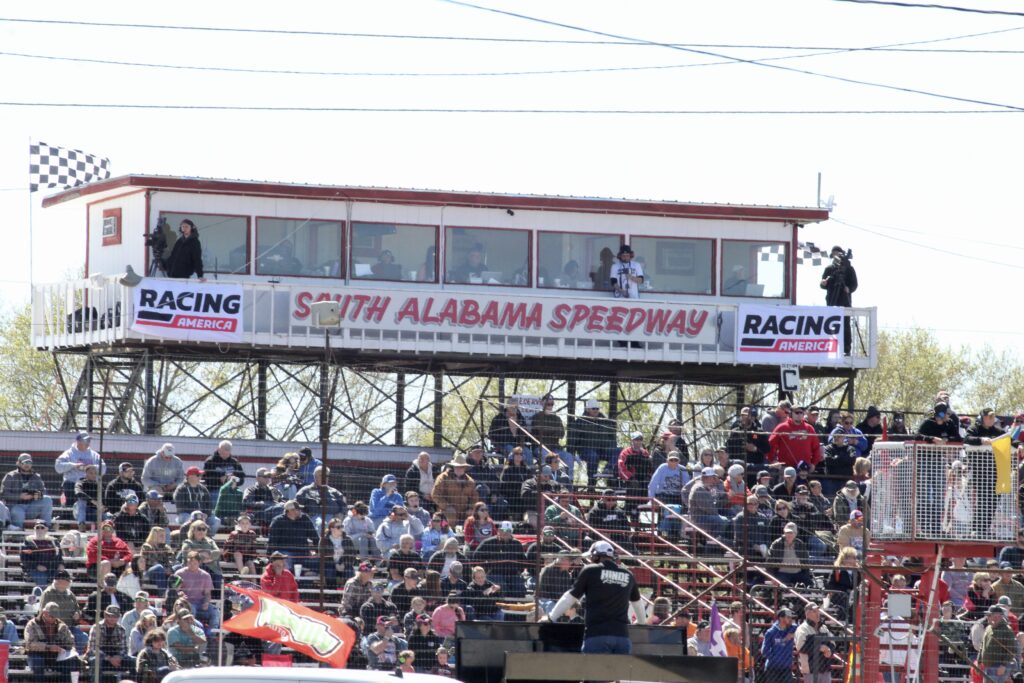
Their schedule continues the week after the ASA STARS race at Pensacola with the Rattler 250 at South Alabama Speedway, a race that will pay $25,000 to the winner. The schedule also includes both marquee races at Berlin Raceway and stops at Mobile International Speedway, I-44 Raceway and Citrus County.
The schedule actually began on January 21 with the All-Star Showdown at Irwindale Speedway.

Brooks and his partners have put together almost $95,000 in purse money for the Rattler with the two Berlin Raceway events paying $10,000 and $30,000-to-win respectively.
All told, between ASA and SRL, Super Late Model racing has a lot of marquee events with big payouts and promoters working diligently to grow the industry.
“My goal is to get start money to where it pays for the tires plus the entry fee, that’s why the Rattler pays $1600 to start,” Brooks told Short Track Scene by phone on Tuesday. … Rule of thumb, whatever first pays, half that for second.”
SRL National doesn’t have a points format, but instead will crown a champion at the end of the year based on total earnings.
“We don’t want people to be forced to follow the tour,” Brooks said. “We hope they’ll race with us where they can, but they can still miss a race, and depending on how they do in the races they enter, still have a chance to collecting the most earnings by the end of the season.”
In a perfect world, pavement Super Late Model racing can support two national tours in the same way dirt Super Late Model racing has Lucas Oil and World of Outlaws but this industry is a long way away from a perfect world.
For one, there isn’t as many pavement Super Late Models as there are dirt Super Late Models, but beyond that, Sargent and Brooks aren’t on the best of terms right now. They both want the same things in the sense that both are trying to elevate pavement racing but don’t expect any collaboration anytime soon.
Sargent claims he initially offered Brooks a job with Track Enterprises and ASA STARS last summer, but Brooks said no such offer was made. The two groups also do not agree on a unified rules package. This is also why Brooks was not at the Snowball Derby in December.
Could Sargent and Brooks eventually come together and more closely align their interests?
“Possibly,” Brooks said. “But not under the terms they’re doing things right now.”
And on the other side.
“Probably not,” Sargent said.
At the same time, competition in the market could prove beneficial to racers and fans, producing innovation and new ideas. But it could also polarize the industry and place racers, tracks and sponsors at odds with each other.
For example, there is still a degree of tension over how Berlin, Mobile and South Alabama became SRL National races after previously being associated with the CRA and Southern Super Series respectively. There is a date conflict between the Southern Super Series at Cordele and SRL National at Mobile on April 1. The ASA STARS opener was scheduled a week before the Rattler.
There is a risk with that sort of tension lingering and both promotional groups are aware of that worst-case scenario of escalating any tension but are also steadfast in their commitment to growing the discipline this season.
As it stands, racers have a chance at making a lot of money between the $20,000-to-win ASA STARRS opener and the SRL Rattler 250 a week later.
Even with the challenges, it has been several decades since there has been this much interest and enthusiasm for pavement Super Late Model racing. Combined with the new CARS Late Model Stock Tour ownership group led by Dale Earnhardt Jr., pavement Late Model racing is experiencing a national resurgence.
Sargent and Brooks now have both the opportunity and pressure of taking pavement Super Late Model racing to the next level and it begins with the ASA STARS race at Five Flags and Rattler 250 at South Alabama.
Both races have robust and star-studded entry lists.
First up is Sargent:
“We’re comfortable with the facility, format and the people,” Sargent said of his race. “There isn’t just one thing that’s keeping me up at night but a bunch of little things.
“As we sit here today, I don’t have just one big challenge, but there are fewer of them than there was a month ago. Sleepless nights and zoom calls with drivers and teams, our team. It’s been as rewarding as its been challenging.”
If you like what you read here, become a Short Track Scene Patreon and support short track journalism!
Read more Short Track Scene:




CARS Tour Northwest
CARS Tour Southwest, Northwest announce 2027 schedules

Super Late Models
ASA, CARS Tour West ownership merge to form national sanction

CARS Late Model Stock Tour
CARS Tour announces 15 race schedule for 2027 season

Pro Late Models
UARA Pro Late entrants set for first race at The Rim

Late Model Stock Cars
NASCAR issues lengthy Martinsville 300 penalty sheet

Late Model Stock Cars
Qualifying Times, Heat Race Lineups for 2026 ValleyStar Credit Union 300
Super Late Models
ASA, CARS Tour West ownership merge to form national sanction

Late Model Stock Cars
Heim and Lapcevich’s tangle leads to fight at Martinsville

Late Model Stock Cars
Caraway reveals $10,000 marquee LMSC race; loose weekly schedule