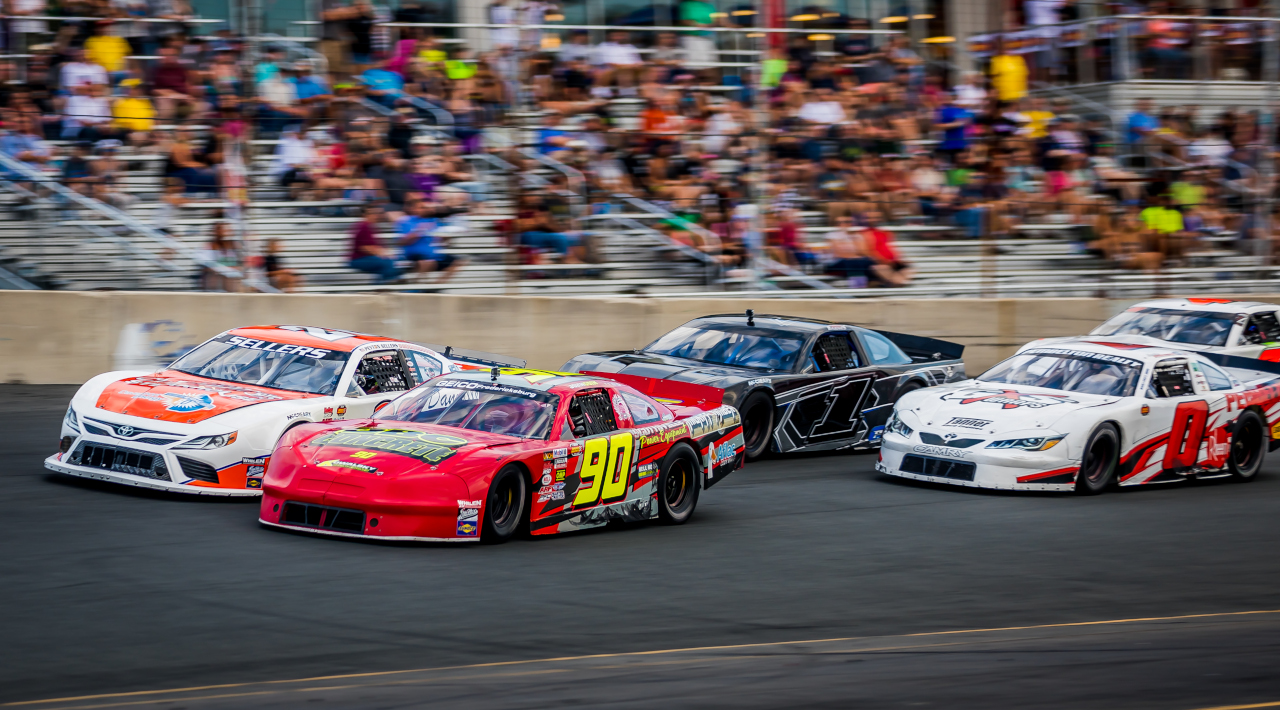
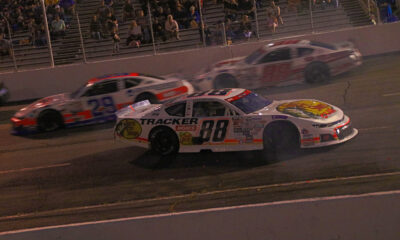
Numerous tracks in the southeast have taken action against Late Model Stock chassis that are in violation of their rules.
Beginning in August, weight penalties were issued to programs that had offsetting chassis, used two pieces of steel for tubing or were found to have improperly angled steering boxes.
Dominion Raceway regular Davey Callihan said the weight penalties are not enough and is worried that NASCAR’s inaction on the modified chassis will price small organizations like his out of Late Model Stock competition.
“There are a lot of little teams like us that are barely able to be here and be competitive,” Callihan said. “The chassis stuff that is going on right now is taking the little guys out of the equation and it’s a shame that NASCAR allows stuff like this to go on.”
The 2021 season has been a remarkable one for Callihan despite having limited resources at his disposal. He currently has two victories at Dominion, both of which came against NASCAR Advance Auto Parts Weekly Series points leader Peyton Sellers.
Callihan spent the entire offseason meticulously building the car that has provided him so much success this year and is proud of what he has accomplished while keeping his chassis within the rulebook.
Even with his consistency, Callihan said that he is still one step behind knowing that many of his more well-funded competitors are going to keep using their adjusted chassis up until the 2021 season concludes.
Callihan views the weight penalties as a metaphorical band-aid that ultimately does little to stop the bleeding.
“I honestly don’t think the weight penalties make us equal to those using cheated-up chassis,” Callihan said. “It’s hard to tell but if your car is cheated up, then 25 extra pounds of weight is not going to slow you down too much, if at all. A chassis is a chassis and there should be no gray areas.”
For Sellers, who uses chassis from Jay Hedgecock, Forrest Reynolds and Lee Malone, he admitted that he is at the mercy of the builders but is relieved that he can still use those cars without further consequences.
What did bother Sellers was an amendment added to the initial July 31 bulletin on Friday afternoon regarding tolerances for offsetting chassis, which he said put drivers at an unfair risk of disqualification this weekend on such short notice.
“I don’t have a problem with the tracks checking the offsets of the cars,” Sellers said. “If the cars are offset too much, then we need to reel them in slowly, not jerk everyone back. A lot of these racers work a 9-5 job and don’t have the ability to read every single rule that comes out. I don’t want to see a guy get DQ’d one night because he didn’t read the fine print of the rulebook.”
Sellers would have preferred the amendment being issued on Monday rather so that teams could have time to figure out whether or not their chassis met the necessary requirements rather than panic at the track on Friday.
Having heard many people air concerns over the legality of certain chassis, Sellers believes that changes needed to happen but admitted to being frustrated over how the tracks handled their crackdown with weight penalties in the middle of the season.
Any disqualification for Sellers or any other driver with an offsetting chassis would put them at a disadvantage since the weight penalties are rules issued by tracks rather than requirements set by NASCAR, which can be appealed.
Sellers is confident that his cars will not have any issues going forward and is eager to communicate with chassis builders and tracks during the offseason to ensure that everyone is being treated equally.
“If this gets regulated right, the competition will be closer together,” Sellers said. “The chassis builders have some work on their hands to get everything reeled back in but we need to work together to get it done over the winter. Let’s not make a guy who is either running up front or on a budget cut their front clip off and change things around.”
Callihan is not quite as optimistic that the gap between big and small Late Model Stock teams will be narrowed once the offsetting chassis are mandated to be fixed next year.
One of Callihan’s cars was subjected to an engine teardown following his victory on May 22, which he admitted negated the confidence and momentum his team had built up to that point.
With the chassis guidelines and other factors outside of his control, Callihan plans to keep his focus on putting together performances that will keep him competitive against Sellers and the rest of the track’s regulars.
“We’re going to try and stay positive,” Callihan said. “We need to keep doing our own deal and put in the work to get my car better every week. That’s really all I can do right now.”
No disqualifications have been issued since the bulletin on weight penalties was announced but the debate surrounding chassis is not expected to die down as teams look to get as many victories as possible over the final months of the season.
Read more Short Track Scene: