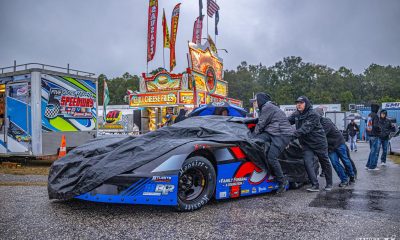
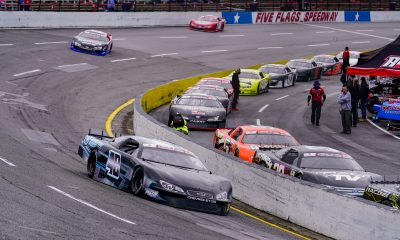
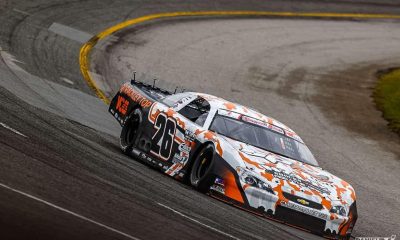
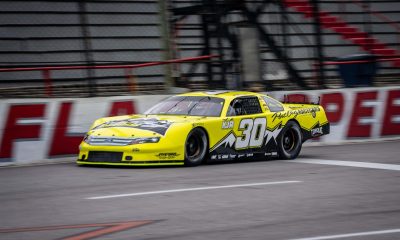
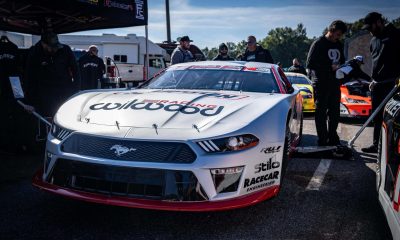
The U.S. Short Track Nationals over the weekend at Bristol Motor Speedway was a messy affair with Trevor Noles earning his signature victory and almost everyone else leaving frustrated with Hoosier Tire or race control.
The event was tri-sanctioned by the Champion Racing Association, CARS Tour and Southern Super Series.
Throughout the event, several Pro Late Model and Super Late Model teams experienced significant tire wear, blistering or cording of their Hoosier F56s.
That necessitated a competition caution to be thrown on Lap 35 of the Super Late Model main event, and a second check on pit road during a caution on Lap 60.
There were also several crashes throughout the event, with teams suggesting that it was the result of the tire wear or race control failing to mandate a clear policy for everyone to take new right sides at the same time via a traditional halfway break.
“Hoosier tire really, really hurt us this weekend,” Stephen Nasse said. “They destroyed 3-4-5 race cars. They probably would have destroyed mine if I hadn’t smart enough to bring it in. All four of my tires were corded …
“If they’re going to send a fresh batch of tires like that, they should say something. And the reason they didn’t say something is they all know we would know you can’t do that.
“The tires are too fresh. They need time to sit. And that’s a prime example of why. We had tires we bought for practice, and I guess they were from last year’s race. The tires that we bought for qualifying and the race were new tires and you see the problems they caused.”
RECAP AND RESULTS: Trevor Noles earns signature victory at Bristol
With that said, Noles and Greg Van Alst made it the entire way on the same set of tires, finishing first and without needing to change their right sides.
Irish Saunders, the asphalt oval manager for Hoosier Tire, appeared on Speed51’s Bullring digital media program on Monday and confirmed that it was a fresh batch of tires that likely needed more time to cure before being provided to teams.
“These tires, I can tell you, were made a month ago,” Suanders said on Speed51’s Bullring. “With COVID, everything that has happened, we are trying to get caught up on production. We just feel these were fresh tires that probably should have had more shelf life to them before we went to this race.
“It’s like fresh bread and old bread. It is going to make the tire run cooler, having some age, and give it some better tire wear. It’s a softer version, and that shelf life means an awful lot.”
Saunders did dispute on The Bullring the consistent claim that a different batch of tires were provided to teams on Friday and Saturday respectively.
Saunders concluded that the longer runs of racing conditions is what contributed to the blistering and cording experienced by teams.
“The first thing I can tell you is they didn’t run nearly as many laps on Friday as they did on Saturday. That’s a big thing,” Saunder said. “We’ve gone to tire tests there and said, ‘Okay, let’s make a 15-lap run.’ The 15 lap tires look great and you think, ‘Wow, this is awesome. We’ll run this, it has a lot of grip.’ Then you make a 40-lap run and in 40 laps, that extra time on the tires – you see 300 degrees in the tire.”
Saunders expects to conduct a tire test before the next U.S. Short Track Nationals and allow any new tire compound to sit in a warehouse for at least four months before getting issued to teams. His full comments can be read here.
Meanwhile, teams also claimed the crashes were the results of the tire failures, something the evidence doesn’t quite support.
In hindsight, both Corey Heim and Sammy Smith’s crashes were the result of a puncture, discovered after the race by tire chief Wesley Weed. TJ Duke’s crash was the result of a right front wheel hub failure.
So while the cording and blistering problems were real, and Hoosier Tire intends to respond to them, none of the crashes on Saturday night were a result of the tire woes or race control’s handling of the concern.
Read more Short Track Scene: