The NASCAR Canada Series had the following number of car counts for the below listed races in 2026:
Riverside: 17
Edmonton: 14
How about in 2025?
Riverside: 14
Edmonton: 10
Saskatoon: 10
Looking at these numbers, NASCAR Canada Series General Manager Alan Labrosse, decided to seek out an opportunity amidst a bit of a financial crunch in the general economy and racing in general. What if the series, at least in the short term, could sacrifice expensive trips out to the prairies and martime in exchange for larger car counts across the remaining races in Ontario and Quebec?
That’s the gamble here.
Labrosse says the NASCAR Canada Series currently lacks the financial support that the Sanctioning Body had in RJ Reynolds for its regional system or even the support of Imperial Tobacco in Canada that super-charged the old Player’s Challenge Series.
So how does he, in his current capacity, serve the teams that currently compete in NASCAR and even want to expand their participation but within their financial means?
“I’m a very teams’ manager, I guess you could say, and although we cater to the interests of all of our stakeholders, the teams are the product and how we present it … and our job is to refine the product and make it competitive, sporting and entertaining.
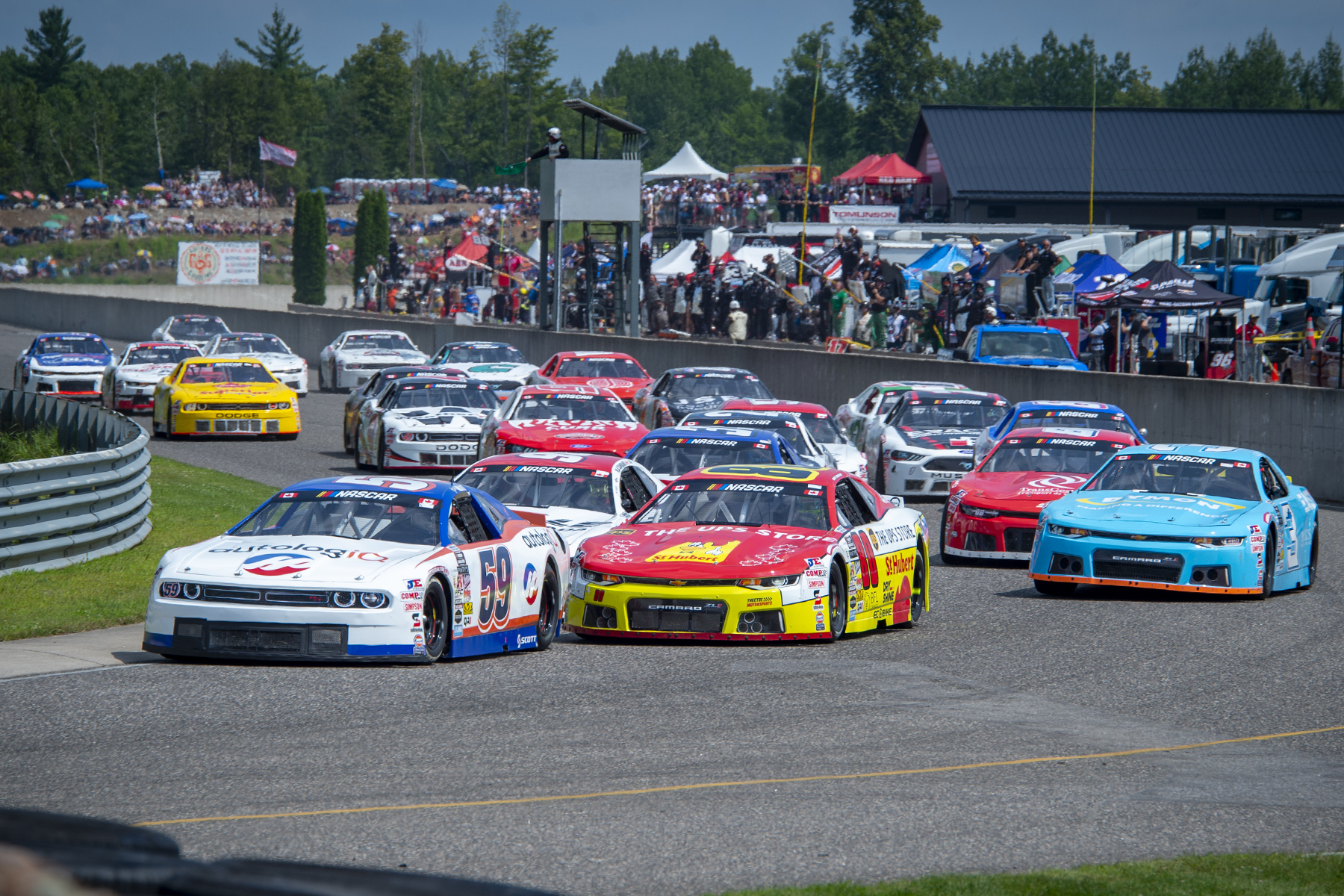
“The teams are coming back, and I think we are one year ahead of schedule for what I had planned, with 39 cars at CTMS, the largest field we ever had. We’ve had decent cars counts but unfortunately, with the schedule we had, the teams were bleeding and we had to stop the bleeding.
“And already, since we’ve released the schedule, teams have told me they’re coming back to do the full championship now.”
Ultimately, seven drivers contested the full season and you could arguably say that number was eight as Andrew Ranger fell off at the end when his championship hopes were dashed, but Labrosse wants the sizes of each race to reflect the expectations of what a NASCAR division is.
“The people from Edmonton, Ron and Loretta (Thiering) are absolutely great people, great promoters,” Labrosse said. “They do a bang-up job. “Riverside is one of the nicest as well … We realize all this, but you also have to live within your means.
“And yes, this whole exercise is to see an influx of new teams and/or existing teams that have up until now only done partial schedules. And some of them will move up to full-time schedules and some of them will move their partial from four races to seven races or seven races to 10, etc. So it’s important. It’s important that we provide a full plate.”
To wit, Labrosse wants to get back to a point where the series competes outside of the borders of Ontario and Quebec, but if they kept going there now, it risked the series completely imploding from a viability standpoint.
The cost of diesel fuel right now certainly doesn’t help.
“So our teams, I heard them loud and clear, and we have addressed what their biggest concerns were,” Labrosse said. “And you can’t drive teams to going, I hate to say, going broke but they were bleeding so much that it was only going to last so long.
“So I really think that this was necessary and time will tell if we’ve made the right decisions, but I’m confident that these are the decisions that will bring us to a stronger foundation, more teams, which means greater entertainment value for the fans that are attending and so on and so forth.”
So while much of the schedule talk centered around the loss of the westernmost and easternmost races, Labrosse was, however, able to bring a years’ long goal to fruition in taking the series back to Jukasa Motor Speedway – a dormant crown jewel.
That facility had one of the needed benefactors short track racing needed in the form of Ken Hill, whom died in 2021, just short of the summer in which he was set to promote a million dollar Pro Late Model race, the Canadian Short Track Nationals.
A member of the Six Nations of the Grand River, he injected a lot of his wealth into the facility and its races, and his death dried up a lot of support for the Canadian racing scene. Labrosse was able to get connected with the remaining ownership group of the facility, the Montour family, through racer turned series official Dave Jacombs and work out an agreement through Dark Horse Events to make a race happen.
It’s a total team effort for Canadian racing as NASCAR will also be joined by the APC United Pro Late Model Series that weekend too.
Labrosse says NASCAR is working with both the track owners and promoters to make sure the event is a success from a camping and non-racing entertainment standpoint too. Everyone wants to make this work to keep racing at the former Cayuga Motor Speedway.
Also, don’t expect NASCAR to move away from the CASCAR style car anytime soon either. There has been some talk over the years to make Canada more compatible with ARCA to entice participation both ways across the border.
Labrosse recognizes that NASCAR Canada has something special with this current car and intends to maintain its legacy.
“The car we have, yes, it’s older but there’s a lot of those new NASCAR Canada chassis that have been built over the past three or four years, and there continue to be new chassis built and so on and so forth,” Labrosse said.
“Finding parts for them is not an issue. Can we make the car better with some improvements? The answer is yes. There’s always the question of affordability, keeping costs contained. Personally, I’m not the technical specialist but I think we have an awesome product, and it’s underestimated, and we have an awesome product with the cars that we have now. They put it on a hell of a show.
“We have some purists who prefer the Super Late Model and Pro Late Model, and they’re spoiled with their coil-binding, and cars that are glued to the track and all of that stuff.
“This is just me personally, but I like what we have. It’s entertaining. It’s a challenge, and it gets the best out of the drivers and the crew chiefs that have to work within the product that they have to win races. Personally, I don’t think we need to change. And if there are some things that we can make better, that we will make them better, that will somewhat satisfy maybe some of the purists and so on and so forth.
“To move over to the ARCA car, that’s literally hundreds of thousands of dollars that teams have invested, and we are telling them to make a flower plant out of it or sell it to someone else to race, and we can only do that if it’s an absolute necessity.
“In our case, we have 22 cars on a short track, and 36 cars on a road course, and these are one hell of a sow. We’re an underestimated product in my opinion, and I know there are a lot of people who like it too, and our show can compete with the best of anyone else out there.”